
日本刀の研究
The Japanese Sword
旭燦会では、武道の実践のみならず、日本刀という文化遺産の学習も重視しています。
名刀を鑑賞し、その本質を理解することは、武士の心に近づく第一歩です。
At Kyokusankai, we emphasize not only the practice of martial arts but also the study of Japanese swords as cultural heritage. Appreciating masterpiece blades and understanding their essence is the first step toward grasping the samurai spirit.
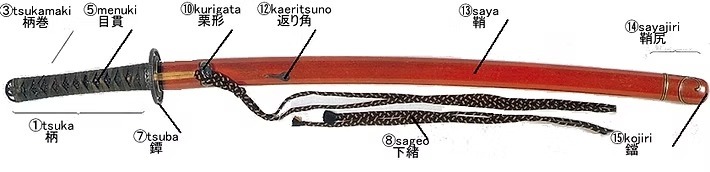
日本刀の各部名称図
五箇伝
The Five Traditions (Gokaden)
五箇伝とは、日本刀の作風や特徴を地域ごとに分類し、その作刀の特徴を5つのグループで示したものです。
平安時代から室町時代にかけて、各地域で独自の鍛錬技術と美意識が育まれました。山城(京都)、大和(奈良)、備前(岡山)、相州(神奈川)、美濃(岐阜)の五つの伝法は、それぞれ異なる地肌、刃文、鋩子の特徴を持ち、日本刀鑑賞の基礎となる重要な分類です。
Gokaden (The Five Traditions) is a classification system that categorizes Japanese sword styles and characteristics by region into five groups. From the Heian to Muromachi periods, each region developed unique forging techniques and aesthetics. The five traditions—Yamashiro (Kyoto), Yamato (Nara), Bizen (Okayama), Soshu (Kanagawa), and Mino (Gifu)—each possess distinct characteristics in grain patterns (jigane), blade patterns (hamon), and tip patterns (boshi), forming the essential foundation for appreciating Japanese swords.
山城伝 (Yamashiro) ▼
平安中期に京都三条に住した宗近を祖とし、京都を中心に栄えた伝法。小沸(こにえ)本位の作刀。地肌は木板目が良く詰んで、地沸が良く付き潤いがある。鎌倉時代に栄えた粟田口一派の梨子地肌の美しさは五箇伝中随一。鎌倉後期に主流となる相州伝は山城伝と備前伝の鍛冶が基礎を築いたとされている。相州伝の隆盛に伴い、山城伝は室町期には衰退して行く。
Yamashiro Tradition: Originating from Munechika who lived in Sanjo, Kyoto during the mid-Heian period, this tradition flourished centered in Kyoto. Characterized by fine nie-based forging, the grain pattern (jigane) features tightly-packed itame with abundant ji-nie creating a lustrous appearance. The nashiji-hada (pear-skin grain) of the Awataguchi school that prospered during the Kamakura period is considered the finest among the five traditions. The Soshu tradition that became mainstream in the late Kamakura period was founded by smiths from Yamashiro and Bizen traditions. With the rise of Soshu, Yamashiro declined during the Muromachi period.
大和伝 (Yamato) ▼
大和伝は五箇伝中最も古い流派。古墳時代、奈良時代に政権の庇護の元に刀剣製作。平安後期になって藤原氏の仏教重視の政策によって奈良の寺院は僧兵を抱えて大きな力を持った。大和鍛冶は寺院の御抱え鍛冶として門前に在し作刀し、抱主である寺院の名前が流派名として呼ばれる。実用本位の作りで重ねを厚く鎬を高く。地肌は板目に全体的に柾目が特徴。刃文は中沸本位の直刃に互の目、小丁子、二重刃、打ちのけ、喰い違い刃など柾目の肌に沿った働きが見参される。
Yamato Tradition: The oldest among the five traditions. Sword production began under government patronage during the Kofun and Nara periods. In the late Heian period, Nara temples gained significant power by maintaining warrior monks due to the Fujiwara clan's Buddhism-focused policies. Yamato smiths worked as temple-affiliated craftsmen, with schools named after their patron temples. Built for practical use with thick kasane and high shinogi. The grain pattern features itame with overall masame characteristics. The hamon shows chu-nie based suguha with gunome, ko-choji, nijuba, uchinoke, and kuichigaiba patterns following the masame grain.
備前伝 (Bizen) ▼
他の流派を圧倒する刀工数が居た。作刀に不可欠な材料が豊富な土地で全国の需要に応えた。特徴は良く詰んだ板目肌、杢目混じりの板目肌の匂本位の丁子乱れを焼き、地に映りが現れる。鋩子は刃文に従って乱れ込み返りは浅く、棟は庵棟で低くなる。備前伝は匂本位の伝法だが、平安時代から鎌倉初期までは、山城伝と同じく沸出来の直刃仕立ての刃文を焼いていることに注意が必要。鎌倉中期になって福岡一文字によって匂本位の丁子刃の焼刃に変化した。
Bizen Tradition: Had an overwhelming number of swordsmiths compared to other schools. The region's abundant essential materials met nationwide demand. Characterized by tightly-packed itame-hada with mokume mixed in, nioi-based choji-midare patterns, and utsuri (reflection) appearing in the ji. The boshi follows the hamon pattern with shallow kaeri, and the mune is low iori-mune. While Bizen is a nioi-based tradition, note that from the Heian period to early Kamakura, they forged nie-based suguha like Yamashiro. In mid-Kamakura, Fukuoka Ichimonji transformed it into nioi-based choji patterns.
相州伝 (Soshu) ▼
相州伝の発生は鎌倉中期に幕府が山城国から粟田口国綱を、備前国から一文字分派の国宗を、少し遅れて備前国福岡一文字助真を鎌倉へ招いたことに始まる。特徴は、板目肌に地沸が厚く付いて地景が交じり、荒沸本位の焼き幅が広い大乱れ、互の目乱れ、飛び焼きや皆焼などを焼き、金筋、稲妻などの働きが豊富な、強い地刃であることが挙げられる。
Soshu Tradition: Originated in mid-Kamakura when the shogunate invited Awataguchi Kunitsuna from Yamashiro, Ichimonji branch Kunimune from Bizen, and later Fukuoka Ichimonji Sukesane to Kamakura. Characterized by itame-hada with thick ji-nie and chikei, ara-nie based wide o-midare, gunome-midare, tobiyaki and hitatsura patterns, with abundant activities like kinsuji and inazuma, creating powerful ji-ha.
美濃伝 (Mino) ▼
南北朝期に正宗十哲の1人である志津三郎兼氏が美濃国の志津へ、金重が美濃国の関へ移住して相州伝をもたらし、もともと大和伝系であった美濃国で大和伝に相州伝が加味された新たな作風が生まれた。美濃伝の特徴は、地肌はザングリとした板目肌で、棟寄りあるいは刃寄りの地肌は柾がかり、鎬高く匂本位の刃文を焼き、どこかに必ず尖り刃が交じる。
Mino Tradition: During the Nanbokucho period, Shizu Saburo Kaneuji (one of Masamune's Ten Students) moved to Shizu in Mino Province, and Kaneshige moved to Seki in Mino, bringing the Soshu tradition. This created a new style combining Yamato and Soshu traditions in Mino, which was originally Yamato-based. Mino characteristics include coarse itame-hada, masame-gakari near the mune or ha, high shinogi with nioi-based hamon, and togari-ba (pointed patterns) always appearing somewhere.